Family Traditions and Special Memories
Talking about family, the past, and the traditions we keep
In this lesson, you will read about family traditions and special memories. You will learn 20 useful B1-level vocabulary words, practise reading, and talk about your own family experiences. The lesson focuses on real adult topics such as childhood memories, family meals, celebrations, generations, and how traditions change over time.
Vocabulary
Click each card to flip it and explore the full definition, example, and synonym.
A special custom that families or groups repeat.
Sunday lunch is an important tradition in my family.
custom, habit
Something you remember from the past.
My favourite memory is eating dinner with my grandparents.
recollection, moment
The time when you were a child.
During my childhood, we spent many weekends together.
early years
To do something special for an important day.
We celebrate birthdays with a family meal.
enjoy, mark
To come together in one place.
Every Sunday, the family gathered around the table.
meet, come together
To get something ready.
My grandmother prepared fresh bread in the morning.
get ready, make
Instructions for cooking food.
My mother still uses my grandmother’s soup recipe.
cooking instructions
A special day or time away from work.
During holidays, our house was full of people.
festival, break
The son of your son or daughter.
Her grandson helped set the table.
male grandchild
The daughter of your son or daughter.
My granddaughter likes hearing stories about the past.
female grandchild
A ceremony when two people get married.
The whole family came together for my cousin’s wedding.
marriage ceremony
The day each year when someone was born.
We always baked a cake for each birthday.
special day
A meal eaten together with relatives.
A family meal can bring people closer.
shared dinner
To give part of something or talk about something with others.
At dinner, we shared stories from the week.
tell, give, divide
The town or city where you grew up.
My hometown always reminds me of my grandparents.
home city, birthplace
People in a family or society who are about the same age.
Different generations have different memories.
age group
To keep something in your mind from the past.
I remember the smell of food in the kitchen.
recall, think back
To feel sad because someone or something is not with you.
I miss the old family house sometimes.
long for
A person who lives near you.
Our neighbour often joined us for coffee.
nearby resident
Helpful words or ideas about what to do.
My grandfather gave simple but wise advice.
guidance, suggestion
Reading
Read the article and explore the highlighted vocabulary. Use the controls to listen as you read.
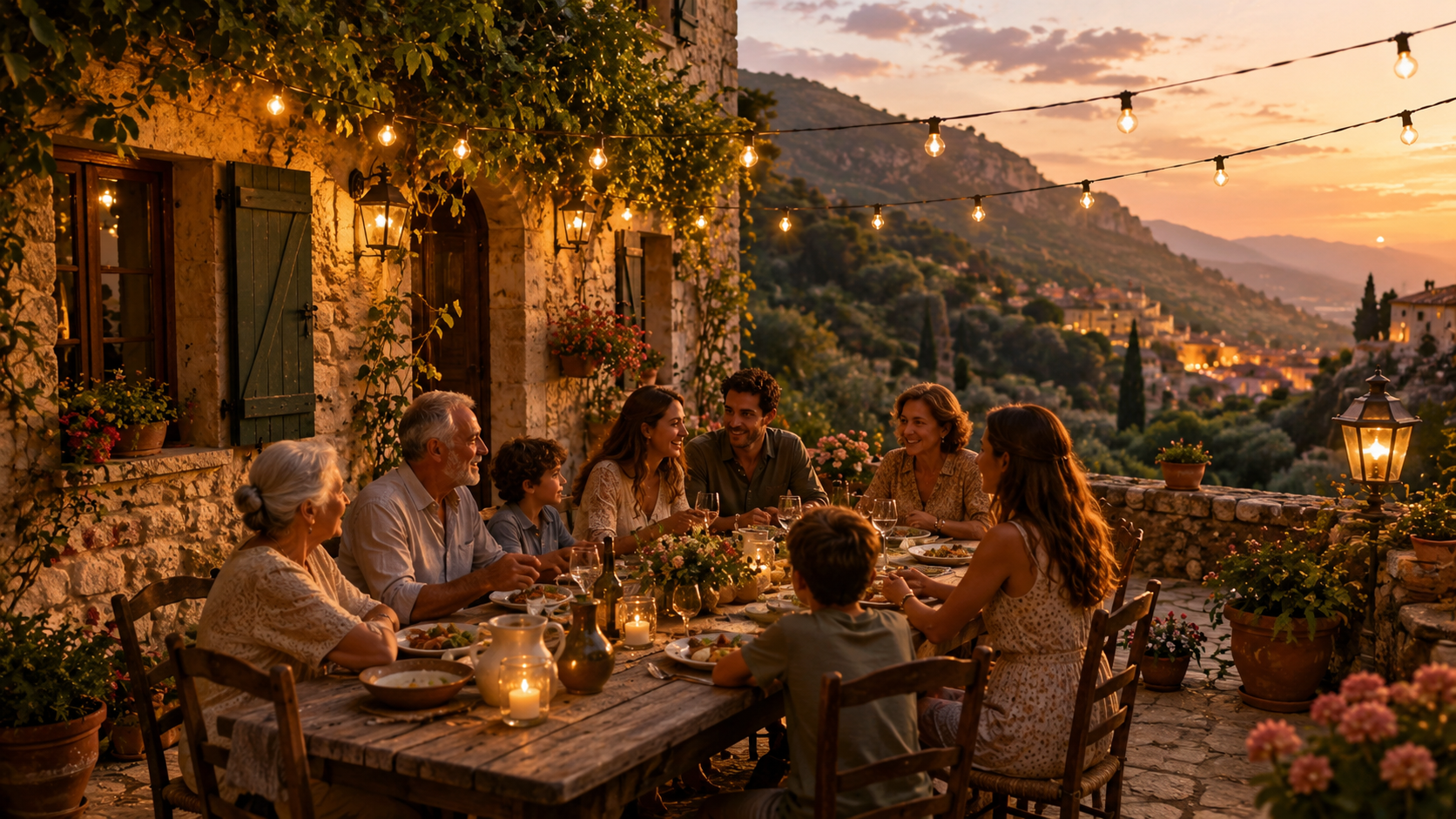
When I was a child, Sundays were very important in my family. My grandparents lived in my hometownthe town or city where you grew up, in a small house with a warm kitchen and a big wooden table. Every weekend, our family gathered there for lunch. It was a simple traditiona special custom that families or groups repeat, but it became one of my strongest memories.
My grandmother always prepared the food early in the morning. She did not need to read a recipeinstructions for cooking food because she knew everything by heart. The smell of soup, fresh bread, and roasted vegetables filled the house. My grandfather usually sat near the window and gave advicehelpful words or ideas about what to do to the younger generationpeople in a family or society who are about the same age. His words were simple, but people listened carefully.
Family mealsa meal eaten together with relatives were never only about food. They were about time together. We talked about school, work, neighboursa person who lives near you, holidaysa special day or time away from work, birthdaysthe day each year when someone was born, and sometimes weddingsa ceremony when two people get married. The adults shared stories from the past, and the children listened, played, and helped carry plates to the table. I rememberto keep something in your mind from the past feeling safe and happy in those moments.
Today, life is different. Families are often busy, and people do not always live close to each other. Some sons and daughters move to other cities or countries. Grandsonsthe son of your son or daughter and granddaughtersthe daughter of your son or daughter may grow up with different routines. But many families still try to celebrateto do something special for an important day special days together and keep old traditionsa special custom that families or groups repeat alive.
I sometimes missto feel sad because someone or something is not with you those slow Sunday afternoons. However, I also believe traditionsa special custom that families or groups repeat can change. A family traditiona special custom that families or groups repeat can be a big holidaya special day or time away from work meal, a birthdaythe day each year when someone was born phone call, a cup of tea with a neighboura person who lives near you, or a photo sent to someone far away. What matters most is not the perfect table or the perfect food. What matters is remembering each other, sharing time, and keeping family connections strong.
Discussion
Think carefully and write your answers. Use your own family memories and opinions.
Vocabulary Check
Choose the best answer for each question.
1. A special custom that families repeat is a ___.
2. The time when you were a child is your ___.
3. To get food or a room ready means to ___.
4. A list of instructions for cooking food is a ___.
5. Your son’s son is your ___.
6. Your son’s daughter is your ___.
7. A ceremony when two people get married is a ___.
8. Helpful words about what to do are ___.
9. To feel sad because someone is not with you means to ___.
10. People in a family who are about the same age are one ___.
11. To come together in one place means to ___.
12. The town or city where you grew up is your ___.
13. To keep something in your mind from the past means to ___.
14. A person who lives near you is a ___.
15. To give part of something or tell something to others means to ___.
Grammar Practice
Practise B1 family-memory grammar: past simple, used to, and present simple comparisons.
Prepositions
Choose the correct preposition to complete each family-memory sentence.
1. We gathered ___ my grandmother’s house.
2. My grandmother prepared food ___ the morning.
3. We sat ___ the table for lunch.
4. I remember stories ___ my childhood.
5. The children listened ___ their grandfather.
6. We celebrated birthdays ___ the whole family.
7. Some relatives moved ___ another city.
8. Traditions can change ___ time.
Homework
Review the lesson with sentence writing, vocabulary practice, and past tense correction.
Part 1: Finish the Sentence
Complete each sentence with your own idea.
Part 2: Choose the Vocabulary Word
Use the words from the box to answer each question.
1. You do this for a birthday or holiday.
2. This is something you remember from the past.
3. This is food eaten together with relatives.
4. This person lives near your home.
5. This is helpful information from another person.
6. This means to come together in one place.
7. This is the town or city where you grew up.
8. This means to tell or give something to others.
Part 3: Rewrite in the Past Simple
Rewrite each sentence in the past simple.